Ledger Unveils $849 Atom Device as Tampered Wallet Losses Top $86M
October 16, 2026
Ledger Answers an $86 Million Breach With a New Device
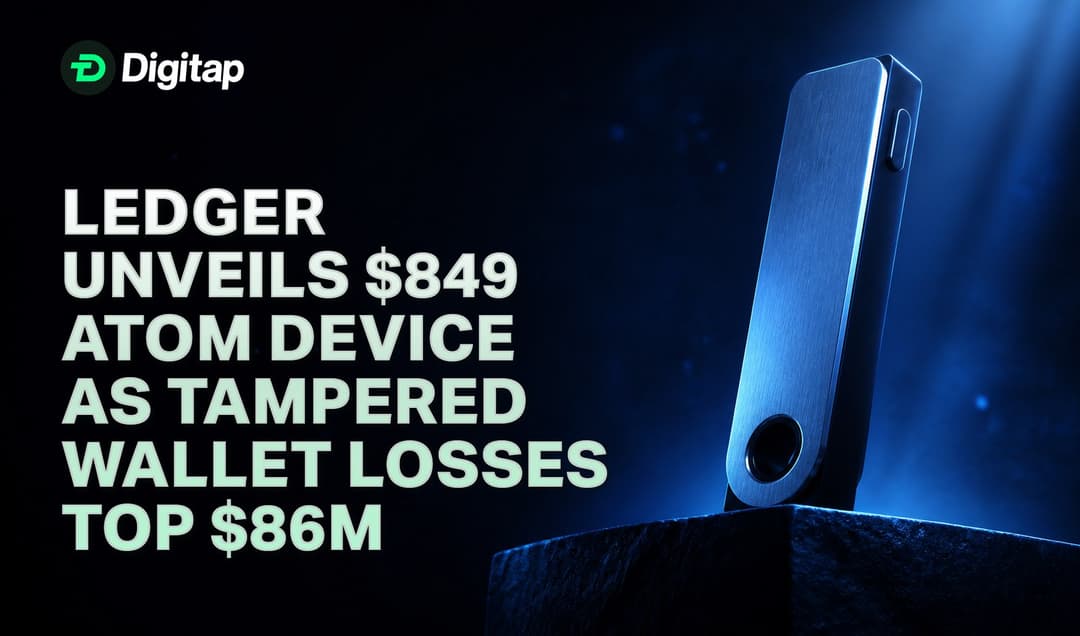
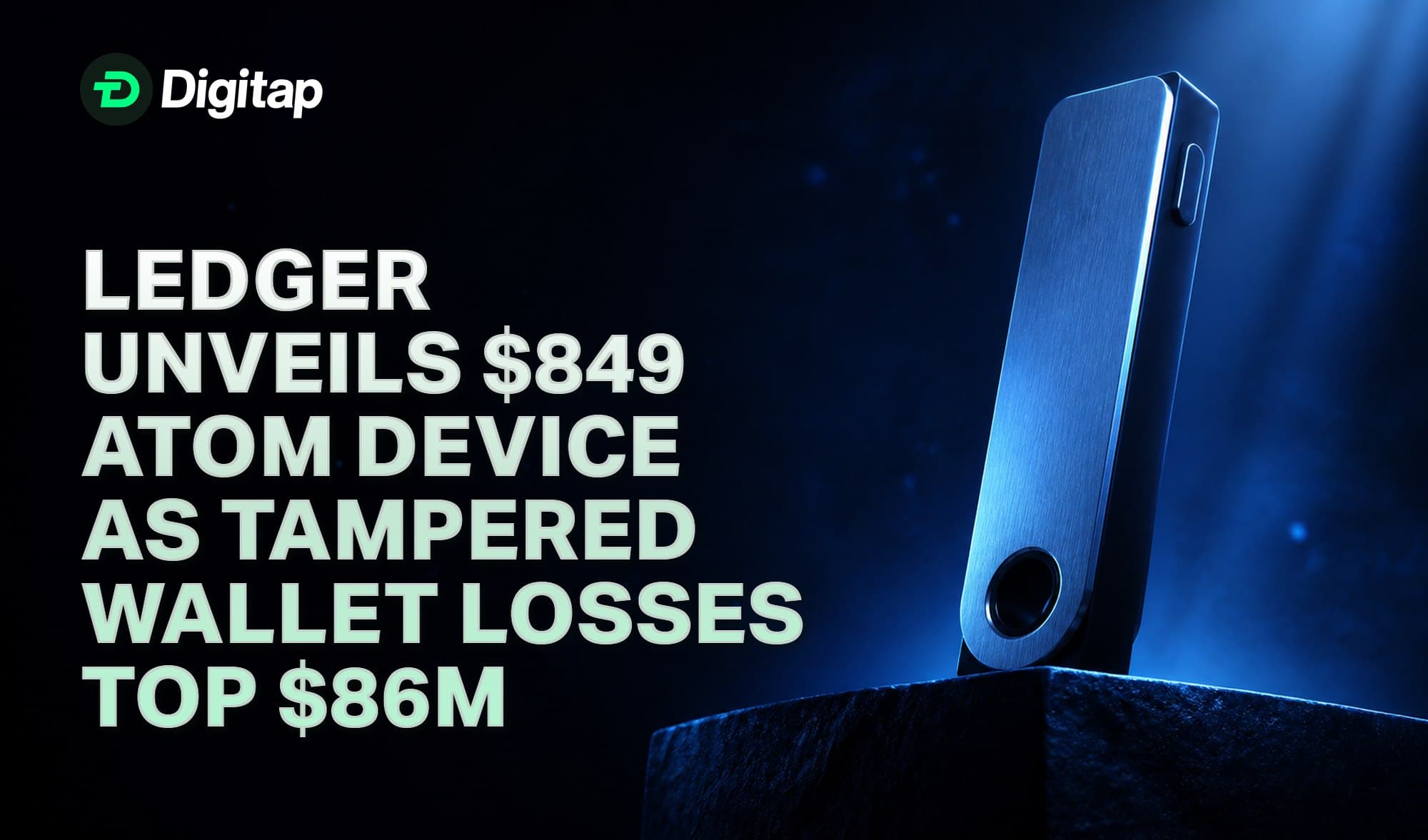
Ledger used its Op3n event in Paris on Thursday to unveil the Atom, a smartphone-shaped device that runs everyday Android apps beside a sealed-off crypto wallet. The timing was not subtle. It landed less than a week after the company confirmed that implants hidden inside wallets sold through reseller CryptoBilis had been capturing recovery phrases.
Onchain researchers have linked that incident to more than $86 million in suspected losses, a figure Ledger has not confirmed, according to The Block. The Atom is Ledger’s attempt to change the conversation from damage to design.
What the Atom Actually Is
The Atom is not a small signing stick. It runs Android Open Source Project software alongside Ledger OS on an EAL6+ secure element, so a user can message, browse and run apps on the same device that holds their keys.
The limited Founder’s Edition costs $849 and can be reserved with a fully refundable $100 deposit. Regular orders will cost $899 after launch. For context, Ledger’s current lineup runs from $69 to $399, so the Atom sits in a different purchase category entirely.
Deliveries are expected to begin in summer 2027, pending certification, and Ledger will sell the device only through its own website. That removes third-party distribution from the equation altogether.
Two Modes, One Device: How Secure Mode Works
Here is the mechanism that matters for anyone weighing a crypto wallet purchase. The Atom automatically switches between Standard Mode, where Android apps run, and Secure Mode, where transactions are reviewed and signed.
A separate FPGA chip keeps the two environments physically apart. In plain terms, the part of the device that talks to the internet and the part that holds the keys are different pieces of hardware, not just different software windows. A Ledger spokesperson told The Block that a malicious Android app could not alter what the user sees in Secure Mode.
A physical switch also cuts power to the cameras and microphone, and Secure Mode automatically disables both when active. The idea is that whatever runs on the Android side, the signing side stays blind and deaf to it.

Tamper Defences Built for the CryptoBilis Attack
The feature set reads like a checklist drawn from the past week. The Atom detects attempts to remove its screen or enclosure. Its secure element, microcontroller and FPGA sit in a protected zone monitored for drilling or prying. The back cover is paired to the device and cannot be swapped with one from another Atom.
Tamper sensors keep running on a separate battery when the device is switched off, targeting the exact scenario where a box is opened in a warehouse long before it reaches a buyer. Ledger says its “Core Protection” feature would block the screen-reader implants used in the CryptoBilis case.
None of this reaches existing hardware. Nano, Flex, and Stax units already owned or still on sale won’t get these protections, leaving current owners to rely on a trusted sales channel.
A Scammer Loses $4.8 Million to the Same Implants
One of the stranger threads surfaced the same day. Blockchain analytics firm Chainalysis reported that a suspected task-scam operator lost 60 BTC, worth about $4.8 million, after moving funds into three newly purchased Ledgers containing spyware, according to Cointelegraph.
The attackers emptied all three wallets into a single destination address. The victim allegedly ran a scheme that paid people to fake product reviews, then pressured them to deposit their own money. Cointelegraph also cited an X post putting the campaign’s total haul above $103.4 million across 530 addresses, a higher estimate than the figure researchers gave The Block.
New Rules for Resellers Take Effect Immediately
Ledger’s own account of the attack, published Thursday, describes attackers who bought genuine devices, fitted hidden components built to capture the recovery phrase during setup, and fed the units back into distribution through resellers in Southeast Asia. The company says there was “no flaw in Ledger’s chip, operating system or servers,” per the Ledger blog.
The response is a set of distribution rules. Ledger products must no longer sit on shelves or displays; stock stays in the back and is handed over at purchase. Returned devices can never be resold, even if they look sealed. Partners must report any customer complaint about an unusual unit.
Ledger says it spot-bought and opened devices in local markets, including Germany, and found every unit clean, with no implant-linked losses in Europe. Competitor Trezor, which reported no tampered devices, will stop working with some distant resellers from January 1.
Can a 2027 Device Fix a 2026 Problem?
The gap between announcement and delivery is the obvious weakness. Summer 2027 is at least eight months away, certification is outside Ledger’s control, and the company announced the Stax device in March 2023, but it only reached pre-order customers in 2024 after manufacturing delays.
Price is the second question. An $899 device competes with flagship phones, not with a $69 wallet, and the pitch appears aimed at what Ledger’s spokesperson called “the security- and privacy-conscious individual.” Partnerships may widen the appeal: Solana Mobile’s Seeker app is coming to the Atom, and Kraken is exploring support for approving exchange actions through Secure Mode. Users who would rather keep funds with the best crypto exchange they can find than manage hardware are unaffected by any of this.
Self-Custody’s Trust Problem Moves From Code to Hardware
When Ledger confirmed the hardware implant on October 10, the lesson was that the weakest link in self-custody could be the path a box takes from factory to buyer. The Atom is the first product designed around that lesson: sensors that watch the casing, a cover that cannot be swapped, and a sales channel with no middlemen.
Whether it works depends on things no spec sheet can show: whether the device ships on time, and whether users at the $69 end of the market ever see the benefits. What the week has settled is narrower but real. Hardware wallet makers now compete on supply-chain integrity, not just cryptography, and the whole industry will have to price that in.
Share Article

Madiha Riaz
Madiha is a seasoned researcher in cryptocurrency, blockchain, and emerging Web3 technologies. With a background in organic chemistry and a sharp analytical mindset, she brings scientific depth to decentralized innovation. Since discovering crypto in 2017 and investing in 2018, she’s been uncovering and sharing deep insights into how blockchain is redefining the digital asset landscape.