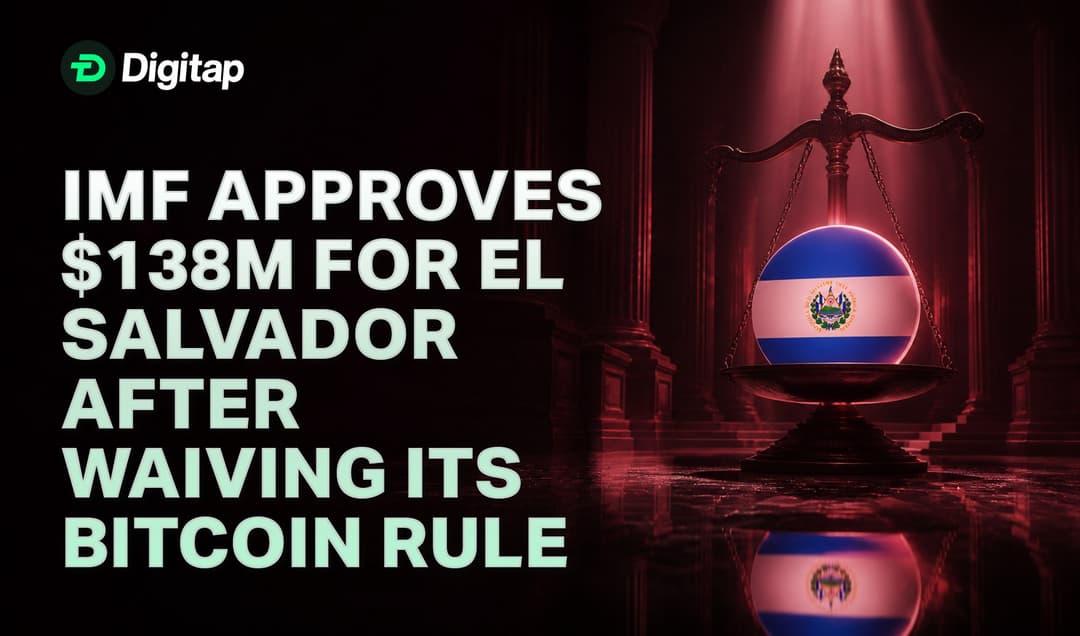
IMF Approves $138M for El Salvador After Waiving Its Bitcoin Rule
October 2, 2026
A Bitcoin Breach the Fund Chose to Forgive
El Salvador has broken one of the rules attached to its International Monetary Fund loan, and the Fund has paid out anyway. The IMF Executive Board completed the combined second and third reviews of the country’s loan programme on October 1, making SDR 101.96 million, roughly $138 million, available immediately, according to crypto.news. The board noted that El Salvador missed several programme targets, including one tied to its Bitcoin holdings, which grew past the agreed ceiling after the first review. It then granted waivers and signed off on the money. That sequence matters more than the headline figure. The breach was written into the record rather than quietly dropped, keeping the condition alive for every future payment.What the $138 Million Actually Unlocks
The disbursement sits inside a 40-month Extended Fund Facility worth about $1.4 billion, approved in February 2025. The first review released around $118 million in June 2025, so the country has now drawn a modest share of the total. In a dollarised economy with no central bank that can print its own currency, these tranches are a direct reserve top-up. The IMF projects gross international reserves of $5.35 billion this year and $6.17 billion in 2027. The programme also pencils in a primary fiscal surplus of 2.9% of GDP for 2026 and 3.7% for 2027, which is where most of the real pressure on President Nayib Bukele’s government sits.Why the Extra Bitcoin Did Not Count as a Purchase
The waiver turned on a single technical point: where the coins came from. IMF staff accepted documentation showing that Bitcoin added since the first review arrived as private donations rather than through government buying. Cointelegraph reported the same finding, noting that national holdings stood at roughly 7,764 BTC, worth around $628 million at the time’s quoted price. The Fund’s own language was blunt about the distinction, saying the increase “did not reflect additional Bitcoin purchases financed with government resources.” Going forward, the programme states that no further government-led accumulation is expected beyond donations that can be documented. The ceiling has not moved; only the explanation has been accepted.
How an IMF Performance Criterion Works
For readers new to this, the mechanism is simpler than the acronyms suggest. The IMF doesn’t hand over a loan in one payment. The Fund splits it into tranches, releasing each tranche only after a review checks the borrower against a list of hard, measurable conditions called performance criteria. Miss one and the Fund can withhold the money, modify the criterion for future periods, or grant a waiver that forgives the specific miss while leaving the rule in place. El Salvador got the third option. A waiver is not a repeal, so the Bitcoin clause will be tested again at the next review rather than retired.The Chivo Wallet Moves Into Private Hands
Alongside the Bitcoin question, the government has handed a private operator majority ownership and operational control of the state-backed Chivo wallet, while retaining a minority stake and custodial duties for customer assets. The IMF has signalled that the remaining public-sector involvement should be fully unwound over time. Chivo was the consumer face of the 2021 legal tender experiment, so stepping back from it is the most visible retreat in the package. Separately, the Fund wants amendments to the Digital Asset Issuance Law and stronger disclosure requirements covering public-sector crypto holdings, a reminder that reporting standards, not price, are the live issue between the two sides.El Salvador’s Economy Beat the Forecasts
The economic read was the easy part of the review. The IMF described activity as stronger than expected, crediting improved public security and a recovery in investor sentiment, and projected growth of 4.5% in 2026 and 4% in 2027. Those are brisk numbers for Central America and they gave the board room to be flexible on a single missed target. A programme going badly rarely produces waivers. Reform work continues on anti-money-laundering rules, fiscal transparency, pensions and revenue administration, none of which generate headlines but all of which gate the remaining tranches.What Could Change Before the Next Review
The open question is whether the donation route stays credible. If holdings keep climbing while the government insists no public money is involved, the Fund may demand tighter verification, and a future review could be harder to clear. Market conditions could also shape the politics. Bitcoin was trading near $86,480 on Friday, up about 3% on the day, with Bitcoin dominance closing in on 60% and USDT dominance slipping to about 6.3%, per CoinDesk. A reserve showing a paper gain is far easier to defend than one showing a loss, and anyone tracking the Bitcoin price knows how quickly that framing can flip. El Salvador is no longer alone in that argument. In Washington, lawmakers advanced a bill that would lock seized Bitcoin into a 20-year federal reserve, which makes a sovereign Bitcoin balance sheet look less like an outlier and more like a category.A Truce That Leaves Both Sides Their Story
Thursday’s decision was a compromise dressed as a technicality. The IMF held its line in writing, recorded the breach, and kept the accumulation limit intact, while El Salvador kept its coins and collected its cash. Both governments can now describe the outcome as a win, which usually signals a durable arrangement rather than a resolved disagreement. The underlying tension, a Fund that treats volatile reserves as a risk and a government that treats them as a strategy, remains unresolved. It has simply been scheduled for the next review. Investors who buy crypto online have little direct exposure to that timetable, but it is becoming one of the clearest tests anywhere of how far an institutional lender will bend for a state that holds Bitcoin.
Share Article

Madiha Riaz
Madiha is a seasoned researcher in cryptocurrency, blockchain, and emerging Web3 technologies. With a background in organic chemistry and a sharp analytical mindset, she brings scientific depth to decentralized innovation. Since discovering crypto in 2017 and investing in 2018, she’s been uncovering and sharing deep insights into how blockchain is redefining the digital asset landscape.