Grayscale Set to Launch the US’s First Spot Chainlink ETF Through Trust Conversion
December 7, 2025
A Major Step for Chainlink
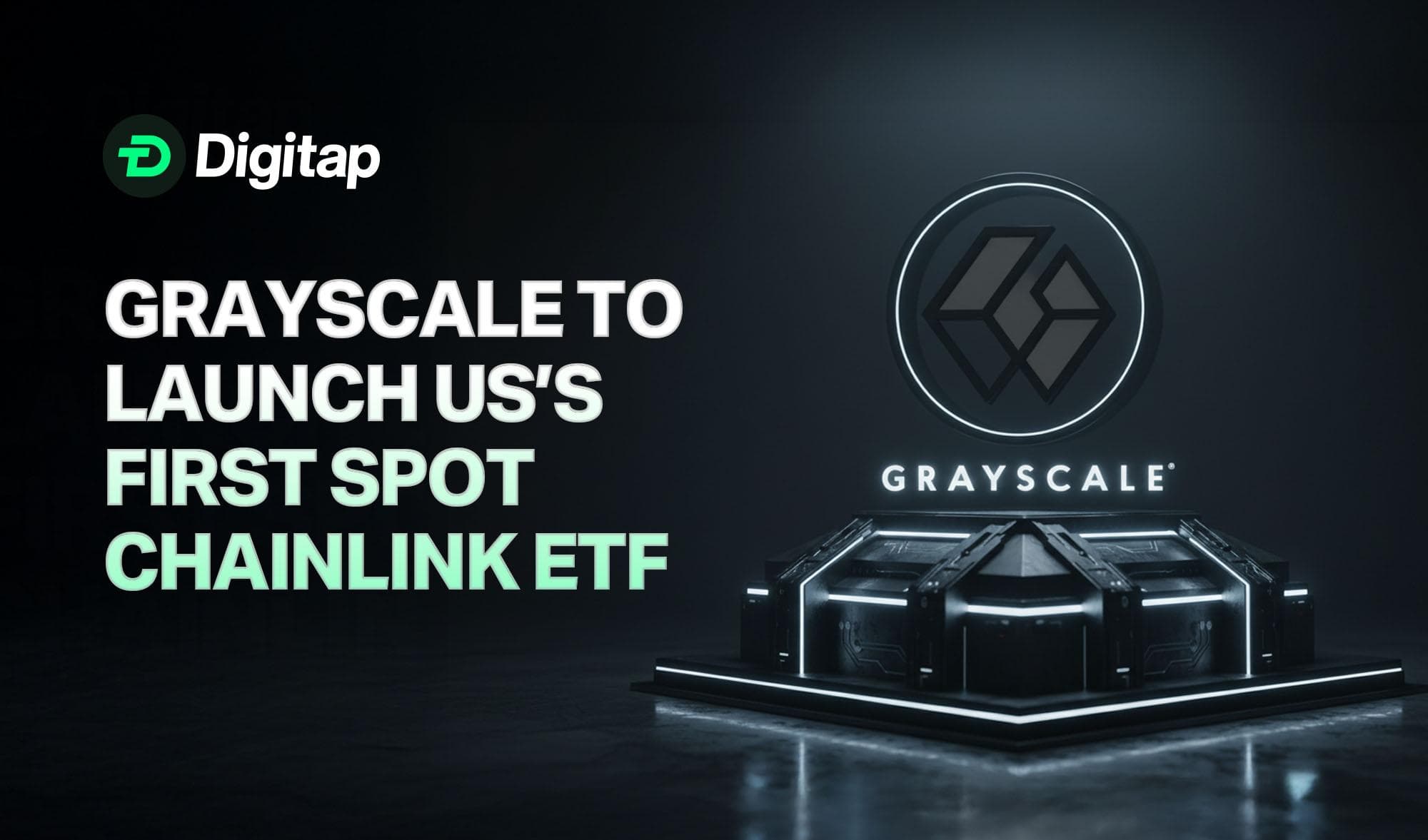
Grayscale’s decision to convert its Chainlink Trust into a fully regulated spot ETF represents one of the most significant developments in the altcoin investment landscape. Set to list on NYSE Arca under the ticker GLNK, the product could become the first U.S.-regulated spot Chainlink ETF if approved.
This move is part of a broader trend of transforming private crypto trusts into exchange-traded funds, giving investors new avenues to gain exposure to digital assets without navigating the complexities of crypto-native platforms. As demand rises among institutional investors, retail participants, and users of the best crypto exchange platforms, the introduction of a Chainlink ETF demonstrates how far altcoins have come in gaining mainstream legitimacy.

Grayscale set to launch First spot link ETF. Source: Nate Geraci
Chainlink now underpins a vast portion of decentralized finance activity, and its oracle infrastructure has enabled over $26 trillion in transaction value to date. Such a scale underlines why institutions are paying serious attention to LINK as more than a speculative token.
Inside the Conversion Process
The foundation of this ETF lies in the Grayscale Chainlink Trust, a fund that has allowed accredited investors to gain exposure to LINK without managing their own tokens. Trust shares represent units of LINK held by Grayscale, but as a private placement product, liquidity is limited. Converting the trust into an ETF transforms the vehicle into a publicly traded asset, offering greater liquidity, transparent pricing, and regulated oversight.
Grayscale submitted its registration statement to the U.S. Securities and Exchange Commission, outlining how the ETF will directly hold LINK tokens and track their market value. Once approved and listed on NYSE Arca, investors can easily trade GLNK through traditional brokerage accounts.
The shift removes one of the biggest obstacles to altcoin adoption: self-custody. ETF investors gain the same economic exposure without needing to handle private keys or maintain a digital wallet, which remains a barrier for many institutions.
Another notable component is the potential integration of staking. Public filings suggest the fund may stake a portion of LINK tokens through approved providers, generating passive rewards that could enhance the ETF’s performance. If implemented, this would mark a rare blend of on-chain yield with a regulated investment product. It also highlights Chainlink’s unique position as a utility-driven token, where staking plays an integral role in securing oracle networks.

Why the ETF Matters
A spot Chainlink ETF carries meaningful implications for a wide range of investors. For institutions, ETFs offer compliance-friendly exposure that aligns with internal governance frameworks. Many asset managers are restricted from holding or storing cryptocurrencies directly, but ETF structures eliminate those limitations. As a result, regulated products often accelerate institutional inflows by reducing operational and custodial risk.
Retail investors also benefit from simplified access. Instead of navigating crypto exchanges or on-chain platforms, they can trade the ETF through traditional brokerage accounts they already use for stocks or commodities. This accessibility is a major driver behind the success of spot Bitcoin and Ethereum ETFs, which saw massive inflows after launch. According to recent data, U.S.-listed Bitcoin spot ETFs now hold over 1.05 million BTC, amounting to billions of dollars under management.
For the broader ecosystem, the ETF signals a turning point. Chainlink’s technology is widely used across DeFi protocols, real-world asset tokenization platforms, and enterprise applications. A regulated product centered on LINK reinforces the idea that its network plays an essential role in bridging blockchain systems with global financial infrastructure. As tokenization continues to expand, Chainlink’s relevance is expected to grow even further.
Market Reaction to the Announcement
Following reports of the ETF conversion, LINK saw some renewed interest, yet its price remains subdued amid a broader altcoin downturn. As of late November 2025, LINK trades in the low-to-mid teens (around US$13), after falling from higher levels earlier in the month. This contrast shows that despite the institutional optimism generated by the ETF announcement, the wider market’s risk-off environment and recent selloffs continue to weigh on LINK’s short-term performance.
Investors closely monitored crypto market prices to evaluate how the announcement affected sentiment across altcoins. Historically, ETF approvals have acted as catalysts for higher trading volumes, renewed interest, and broader media attention, particularly when they involve assets moving from niche crypto markets to regulated financial exchanges.
While short-term reactions tend to fluctuate based on broader macro conditions, analysts believe a spot Chainlink ETF could drive more stable demand for LINK. ETFs typically require underlying asset purchases to meet inflows, which can contribute to more consistent market support. At the same time, staking integration, if adopted, adds an additional dimension to the demand narrative, since staked tokens reduce circulating supply.
On-chain data also reflects rising developer activity across the Chainlink ecosystem. With new partnerships, cross-chain functionalities, and real-world data feeds expanding, market participants widely view the ETF development as aligning with Chainlink’s long-term fundamentals rather than representing a short-lived trading catalyst.
Opportunities and Risks Ahead
Despite the enthusiasm surrounding the ETF, several challenges remain. Approval from the SEC is still pending, and regulatory bodies continue to scrutinize crypto-based investment products. Any delays or rejections could disrupt short-term momentum. Additionally, ETFs depend on reliable market infrastructure, deep liquidity, and transparent pricing, all areas where crypto markets remain more volatile than traditional finance.
Investors also face strategic choices. Some may prefer to buy crypto directly for full control and access to on-chain features, while others prioritize regulated exposure with lower operational risk. Each path carries its own benefits: direct ownership offers flexibility and staking opportunities, while ETFs offer simplicity, tax efficiency, and lower barriers to entry. Such contrasts are likely to shape how different segments of the investor base respond.
Competition may also intensify. If the Chainlink ETF succeeds, other asset managers could file for similar products tied to different altcoins. The expansion of altcoin ETFs would reshape how U.S. investors gain exposure to Web3 technologies, potentially increasing market maturity while also dividing inflows across more products.
Conclusion: A Pivotal Shift for Altcoin ETFs
Grayscale’s move to launch a spot Chainlink ETF represents more than a product expansion; it marks a significant moment in crypto’s integration with mainstream financial markets. By offering regulated exposure to LINK, the ETF could attract new categories of investors, deepen liquidity, and strengthen Chainlink’s standing as critical infrastructure for decentralized and tokenized ecosystems.
Whether or not the product includes staking, its approval would reflect a growing recognition of altcoins within institutional portfolios. As the industry waits for regulatory clearance, the Chainlink ETF stands as a clear indicator of where the next phase of crypto investment is heading.
Share Article

Madiha Riaz
Madiha is a seasoned researcher in cryptocurrency, blockchain, and emerging Web3 technologies. With a background in organic chemistry and a sharp analytical mindset, she brings scientific depth to decentralized innovation. Since discovering crypto in 2017 and investing in 2018, she’s been uncovering and sharing deep insights into how blockchain is redefining the digital asset landscape.