California Passes 78-0 Memecoin Ban for Public Officials, Heads to Newsom
September 2, 2026
California Sends Sweeping Memecoin Bill to Newsom’s Desk
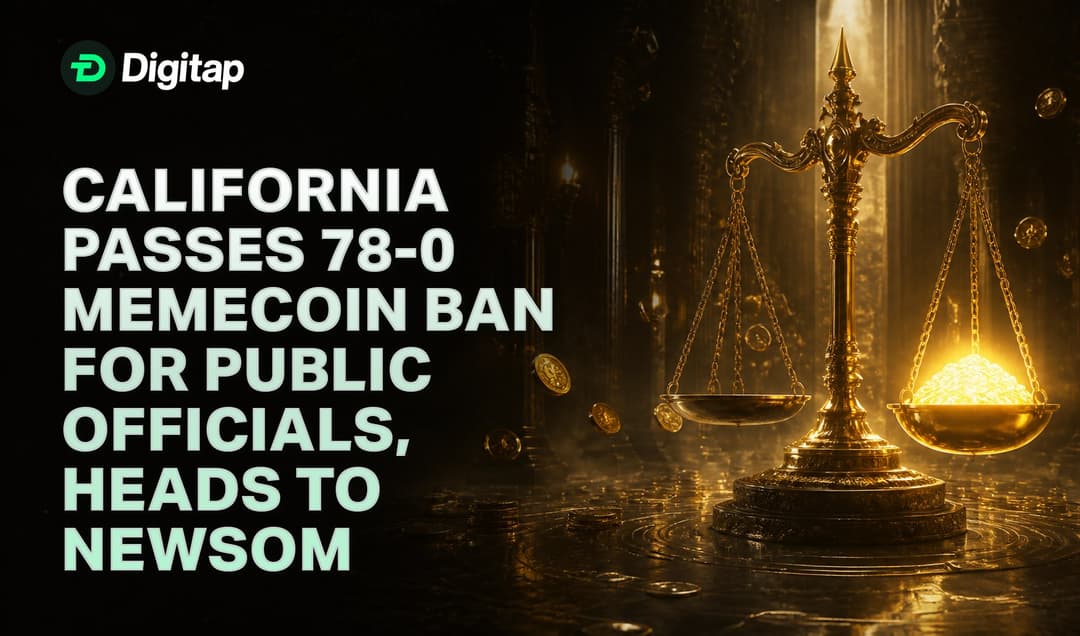
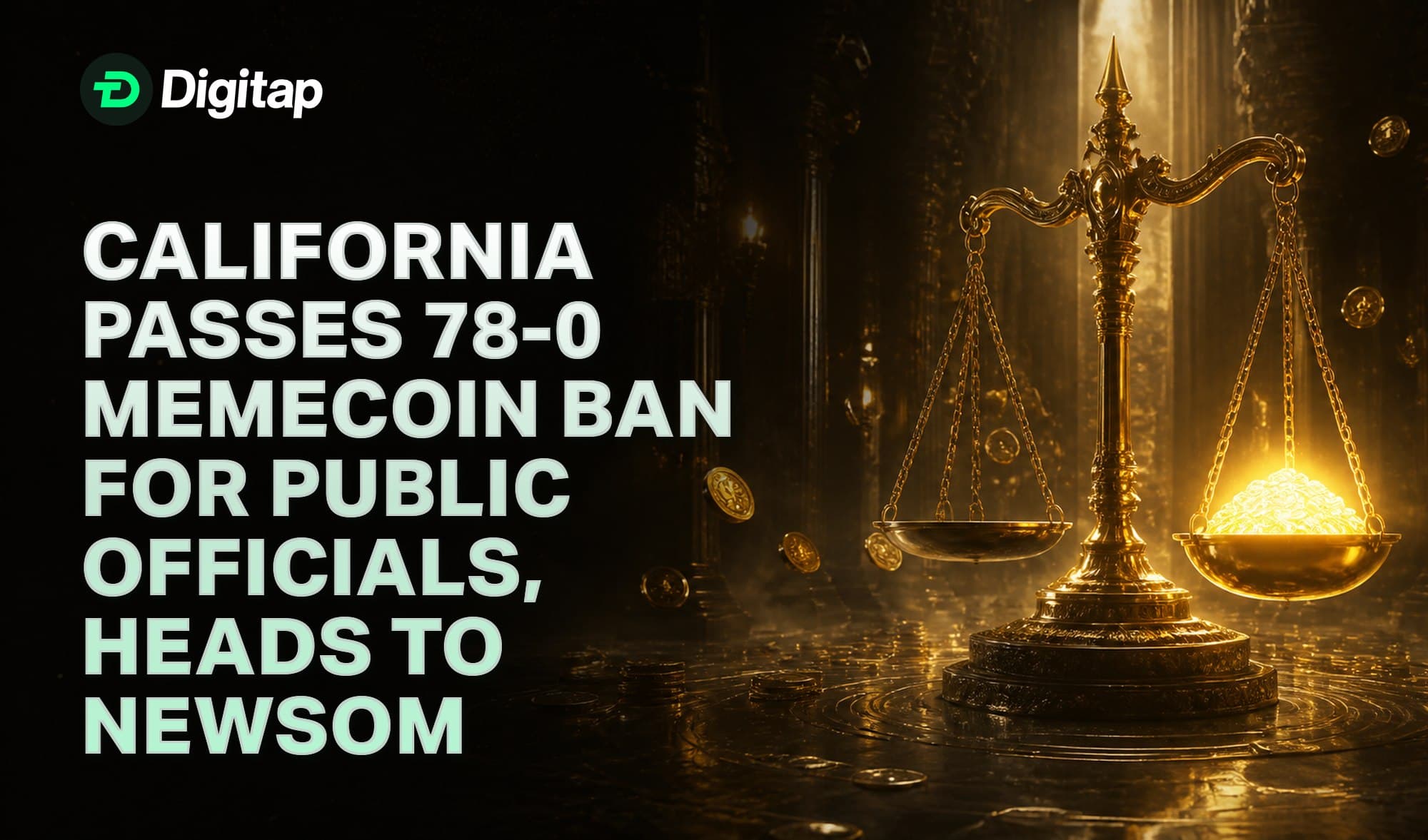
California just became the first US state to pass a comprehensive legislative ban on public officials issuing memecoins, and the bill now sits on Governor Gavin Newsom’s desk awaiting his signature. AB 2409, authored by Assemblymember Avelino Valencia, cleared the state Assembly 78-0 in a concurrence vote and passed the Senate 40-0 on August 26, closing months of debate over how far a state can go in policing crypto’s most speculative corner.
The story is landing in the latest crypto news cycle because it touches a raw nerve that every regulator has been circling since the TRUMP token launch: politicians selling their own tokens to the public.
What AB 2409 Actually Prohibits
The bill has two moving parts, and both are aimed at cutting off any commercial channel between elected office and memecoin markets. The first bars state and local public officials, as well as certain public employees, from issuing memecoins, with issuance broadly defined as making a token available for public purchase, donation, or exchange for anything of value.
The second targets the exchange side, prohibiting any digital asset service provider from listing a memecoin to California residents if the token carries the likeness or image of a federal, state, or local public officer. Enforcement is civil, not criminal: the Attorney General, district attorneys, city attorneys, and county counsel can pursue injunctions and disgorgement of profits, according to the Senate Judiciary Committee analysis.
The 78-0 Vote and Its Bipartisan Signal
Both chambers moved unanimously, which is rare on any crypto bill and rarer on one touching the First Amendment questions memecoins raise. Assemblymember Valencia framed the case in plain terms, noting that memecoin platforms make token creation trivially easy and could allow officials to “circumvent existing financial disclosure and conflict-of-interest rules,” per crypto.news.
Committee analyses added a foreign-influence angle, arguing that a tradable token tied to a sitting official creates an undisclosed pipeline for buyers to move value to that official from anywhere in the world. The 78-0 concurrence and 40-0 Senate votes suggest that lawmakers across the aisle saw the same risk and did not want to be on record opposing it.

How Memecoins Turned Into a Political Problem
A memecoin is a token whose value is driven almost entirely by attention rather than utility, code, or cash flow. Anyone can spin one up on chains like Solana or Base in minutes for a few dollars in fees, list it on a decentralized exchange, and hope a community forms around it. When the branding attaches to a real public figure, especially one still in office, the token stops being a joke and becomes more of a tradable proxy for that person’s political fortunes.
Buyers can push the price up in ways that resemble a donation, insiders can offload holdings into that buying, and none of it moves through the disclosure paperwork that governs ordinary campaign finance. That mechanism is exactly what AB 2409 targets, treating the token itself as the vehicle for the conflict of interest, regardless of what the official says about it publicly.
Why the 2027 Start Date Matters, and Why Trump’s Token Escapes
The exchange listing ban applies only to memecoins issued on or after January 1, 2027, which means the Official TRUMP token and any other officially linked coin already trading are grandfathered in and may continue to appear on the best crypto exchange venues serving California users.
The Committee analysis referenced Trump’s April 2026 Mar-a-Lago event, restricted to major TRUMP holders, as part of the ethics record it drew on when framing the bill. The design choice matters: California’s lawmakers wanted a rule they could defend as forward-looking regulation rather than retroactive punishment, and the 2027 cutoff gives platforms roughly 16 months to build listing controls that can screen for the likeness or image of any public officer at any level of government.
What Happens Next in Sacramento and Beyond
Newsom has until mid-October under California’s standard bill-review window to sign, veto, or let the measure become law without his signature, and he has not publicly signaled his position. If he signs, California becomes the first state with a memecoin-specific statute on the books, and other legislatures may treat it as a template, particularly in states already drafting digital-asset frameworks.
Federal action could follow separately: members of Congress have already introduced the Modern Emoluments and Malfeasance Enforcement Act, which would apply a similar ban to the President, Vice President, and members of Congress. Whether either track moves may depend on how the market reacts and whether the passage of AB 2409 pulls attention back to broader crypto market prices and the sector’s political overhang.
A Clearer Line Between Elected Office and Speculative Tokens
The through-line of AB 2409 is not really about memecoins as an asset class. It is about drawing a bright legal line between the person who holds public office and the speculative token markets that public office can move. California appears to have decided that the line should be a hard one, that platforms should be responsible for enforcing it, and that civil disgorgement is a sufficient deterrent to make the rule stick without turning it into a criminal matter.
If Newsom signs, the significance lies less in the immediate market impact, which is likely to be modest, and more in the precedent: a US state has treated the intersection of elected office and token issuance as a regulated interface rather than a gray area. Every future presidential or gubernatorial token launch will have to answer to that framework, and every exchange that wants California users will have to build the controls to prove it does.
Share Article

Madiha Riaz
Madiha is a seasoned researcher in cryptocurrency, blockchain, and emerging Web3 technologies. With a background in organic chemistry and a sharp analytical mindset, she brings scientific depth to decentralized innovation. Since discovering crypto in 2017 and investing in 2018, she’s been uncovering and sharing deep insights into how blockchain is redefining the digital asset landscape.